
Blog
- Home

- Blog
03 June 2025
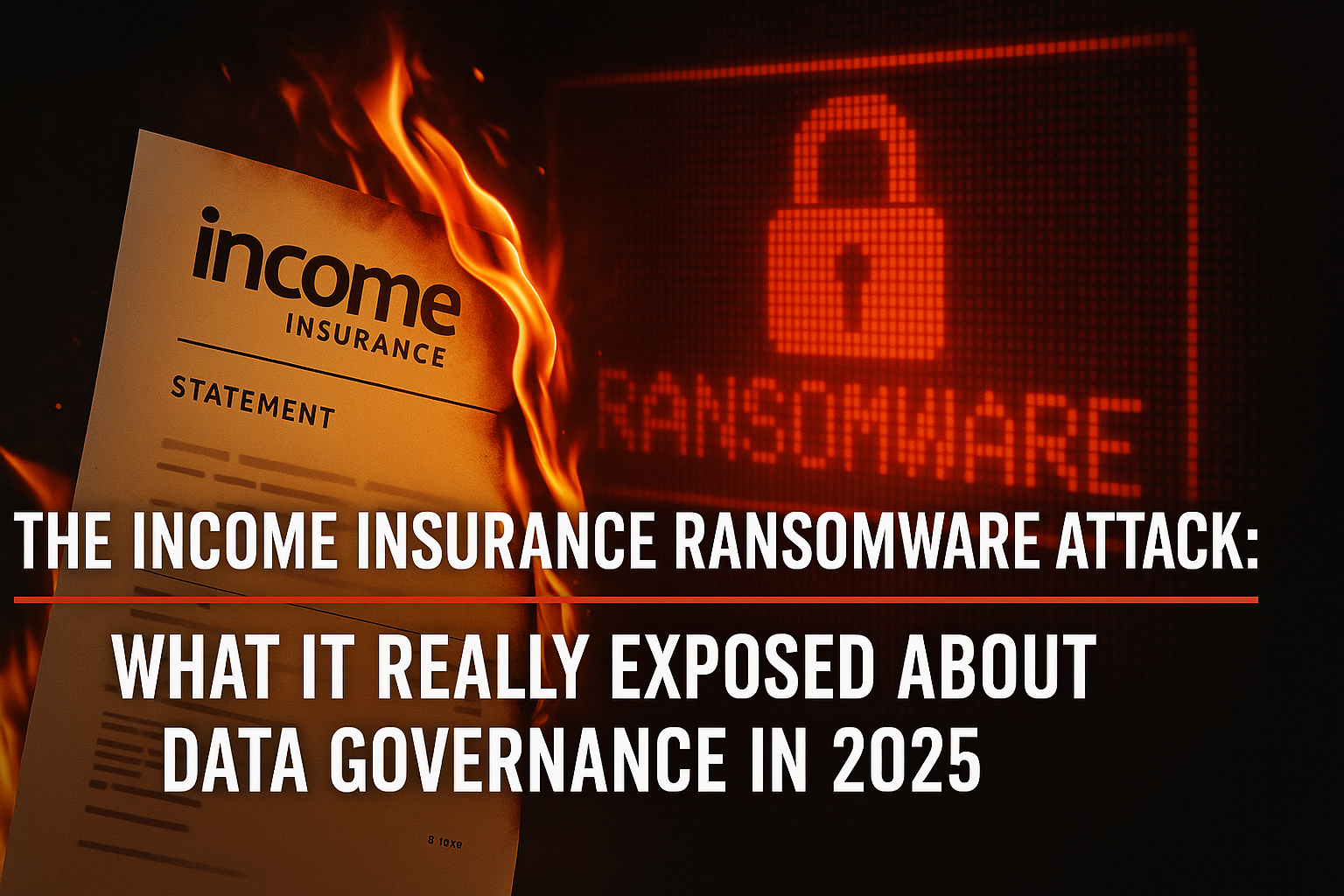
The Income Insurance Ransomware Attack: What It Really Exposed About Data Governance in 2025
“You can outsource operations. You cannot outsource accountability.” — A Data Governance Principle the World Keeps Forgetting
Another day, another data breach.
This time, a hacker group called “Direwolf” targeted DataPost, a company that handles printing and mailing documents for clients like Income Insurance.
And boom — the personal info of at least 146 policyholders was stolen.
We’re talking names, addresses, policy details, bonuses… all gone to the wolves.
But here’s the scary part:
It wasn’t Income Insurance’s systems that got hacked.
It was their vendor. The third-party service they trusted.
So… What Actually Happened?
- DataPost prints and sends letters for big companies, including Income Insurance.
- On May 27, hackers launched a ransomware attack, stealing customer data and likely locking systems.
- Income only found out after a cybersecurity blog flagged it online (not great).
- They quickly cut ties, froze connections, and informed affected customers.
- Authorities like PDPC and CSA are now investigating.
If you give someone your data — and they pass it to someone else — who’s really protecting it?
The Bigger Problem: Trusting Someone Who Trusted Someone Else
Let’s simplify this with a relatable example.
Imagine you gave your expensive Rolex to a valet.
That valet then handed it to another valet to park it “offsite.”
And that valet? Left it in an unlocked car.
When it’s gone, do you blame the second valet?
No. You blame the one YOU trusted.
That’s what’s happening here.
Income Insurance trusted DataPost.
DataPost got hacked.
Customers now wonder: “Who really had my back?”
Lessons We All Need to Learn
1. You Can’t Just Outsource Everything
Just because someone else is handling your data doesn’t mean you’re off the hook. Businesses must know who their vendors are, what systems they use, and how secure they really are.
2. Don’t Wait for News to Break the News
The fact that this breach was discovered by a blog first (not the company) is a red flag. Companies need to have systems that can spot unusual activity fast — not wait for a headline to react.
3. Always Have a “What If” Plan
Hope is not a strategy. Businesses must run data breach fire drills, just like we have fire alarms. If something goes wrong, who calls who? Who locks down the system? Who tells customers?
4. Data = Trust
Customers don’t just give you their info — they give you their trust. Losing that is worse than losing data. Rebuilding trust takes years. Losing it? Just one breach.
A Philosophical Reminder (Let’s Get Deep for a Second)
Think about this:
Every time a customer gives you their data, it’s like handing over a piece of their identity.
Your job?
Guard it like gold.
Because in this digital age, privacy is currency, and trust is priceless.
This incident isn’t just about hackers or insurance.
It’s about a deeper issue: accountability in a connected world.
Just because you didn’t get hacked directly doesn’t mean you’re innocent.
If someone you trusted fumbled the ball — you still lose the game.
So whether you’re a CEO, an IT manager, or someone reading this while waiting for your bubble tea…
Always ask: “Who has my data?”
And more importantly… “Who’s watching over them?”


